
Stucco repair in the Catalina Foothills, Arizona

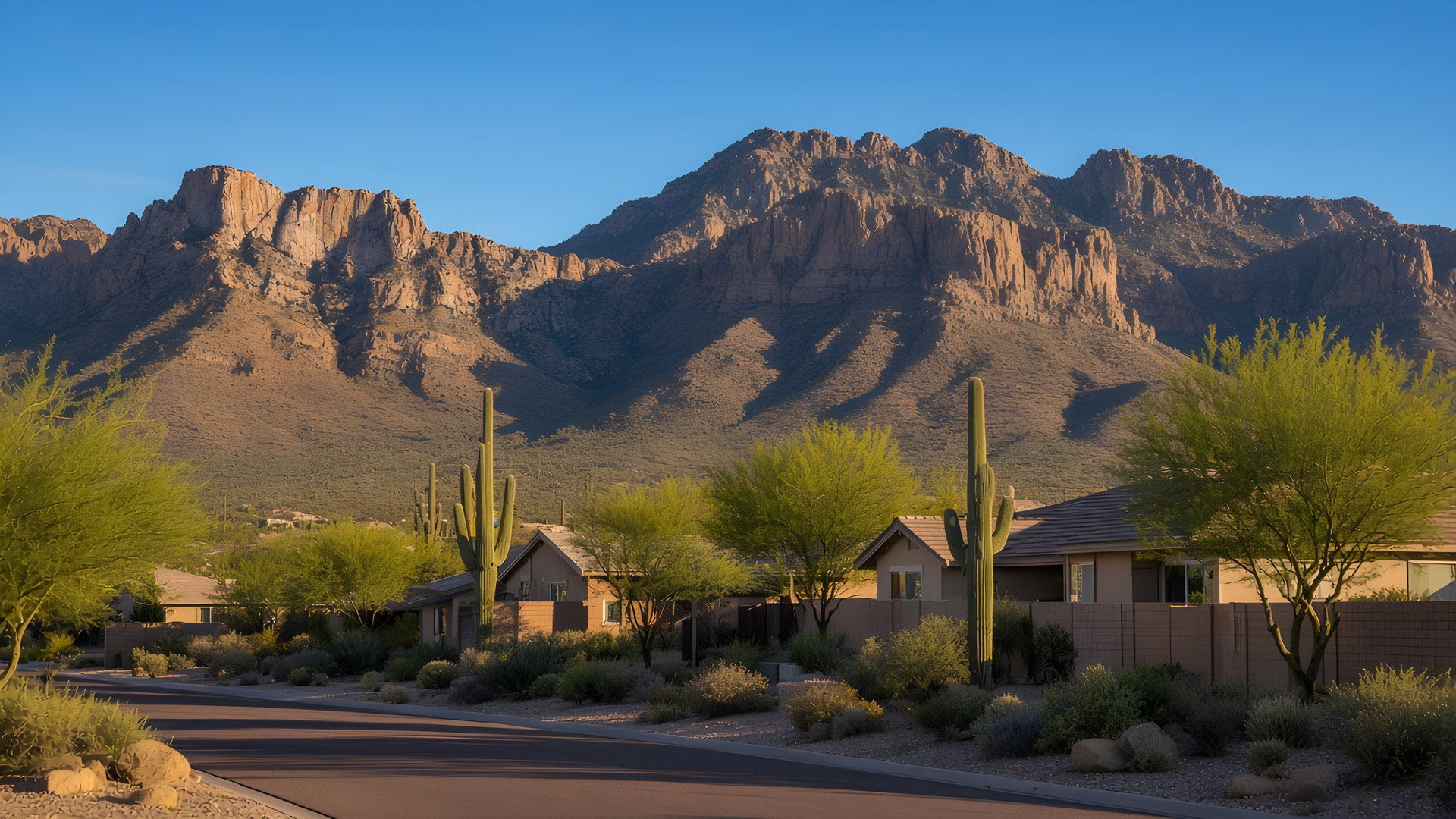
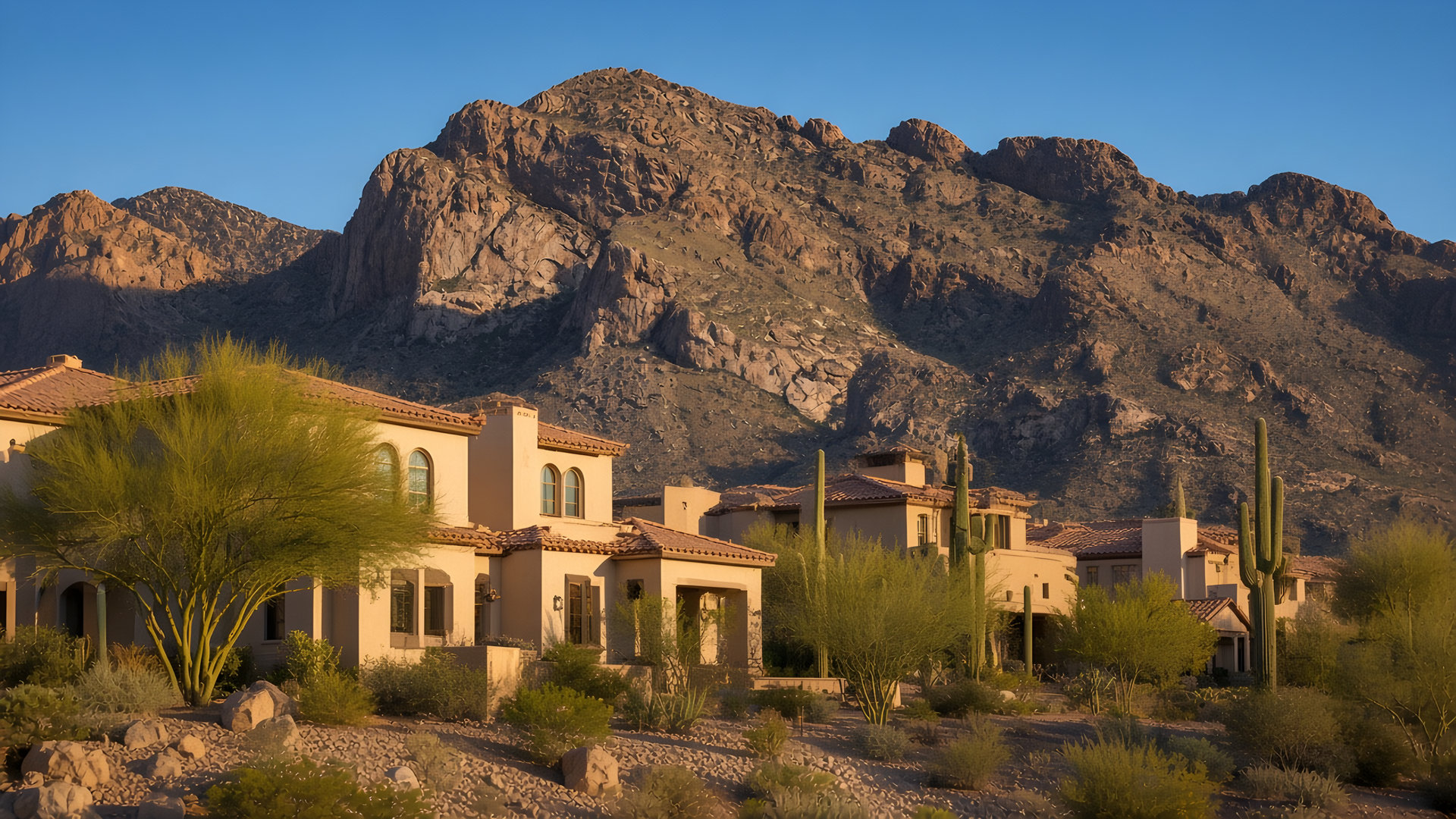
The Catalina Foothills rise north of River Road toward the front of the Santa Catalina Mountains. Homes here are mostly custom, on hillside lots cut by washes, and many have smooth stucco finishes that show every flaw.
Houses we work on in the foothills
Foothills homes run from 1960s ranch houses to large contemporary and Santa Fe style homes built in the last few decades. Flat roofs with parapets, long walls of smooth stucco and deep window openings are common.
Many sit on slopes with retaining walls and garden walls finished in the same stucco as the house. Those walls take a lot of sun and water, and they crack and stain sooner than the house.
Common stucco problems in the foothills
Smooth finishes are the biggest challenge. A sand finish hides small cracks and patches. A smooth troweled wall shows them in low morning and evening light. Matching a repair on these walls takes hand work and time.
Runoff is the other. Water coming down the slope during summer storms hits the uphill wall of the house and the retaining walls. If drainage behind a wall is poor, water soaks into it and pushes salts out through the stucco.
Parapets on these homes are often tall and long, and they take sun from both sides. Cracks along the caps and failed scupper flashing let storm water into the wall.
Repair notes for custom homes
On a large smooth wall, a small patch can be hard to hide. Sometimes the cleanest result is refinishing the wall to the nearest corner or control joint. We will show you both options and what each will look like.
Many foothills homes have integral color stucco. We match those with sample boards dried in daylight, and use a fog coat to even out a repaired face if needed.
Garden walls and retaining walls
Foothills lots often have long stucco garden walls and retaining walls that step down the slope. They usually have no roof over them, so rain falls straight onto the cap and runs down both faces.
A cracked cap lets water into the core of the wall. On retaining walls, water also builds up behind the wall if the weep holes are blocked. Clearing the weeps and sealing the cap are often the first repairs before any refinishing.
We check the top of each wall for a slope that sheds water. Flat caps hold water after storms and wear out far faster than sloped ones.
Slopes, washes and access
Some foothills homes also have exposed wood vigas or beam ends that pass through the stucco. The joint where wood meets stucco opens as the wood dries and shrinks, and water follows the beam into the wall. Those joints get sealed with a flexible sealant, not packed with stucco.
Steep lots, desert landscaping and long walls can make access harder. We plan ladders and scaffold around plants and boulders, and we protect native plants near the work area. Some foothills homes sit higher on the mountain and see cooler winter nights, which affects when we can finish.
Stucco repairs in Catalina Foothills
Seven kinds of work cover nearly every stucco problem on Tucson area homes. Each card goes to a page with how the repair is done, how long it takes and what affects the cost.
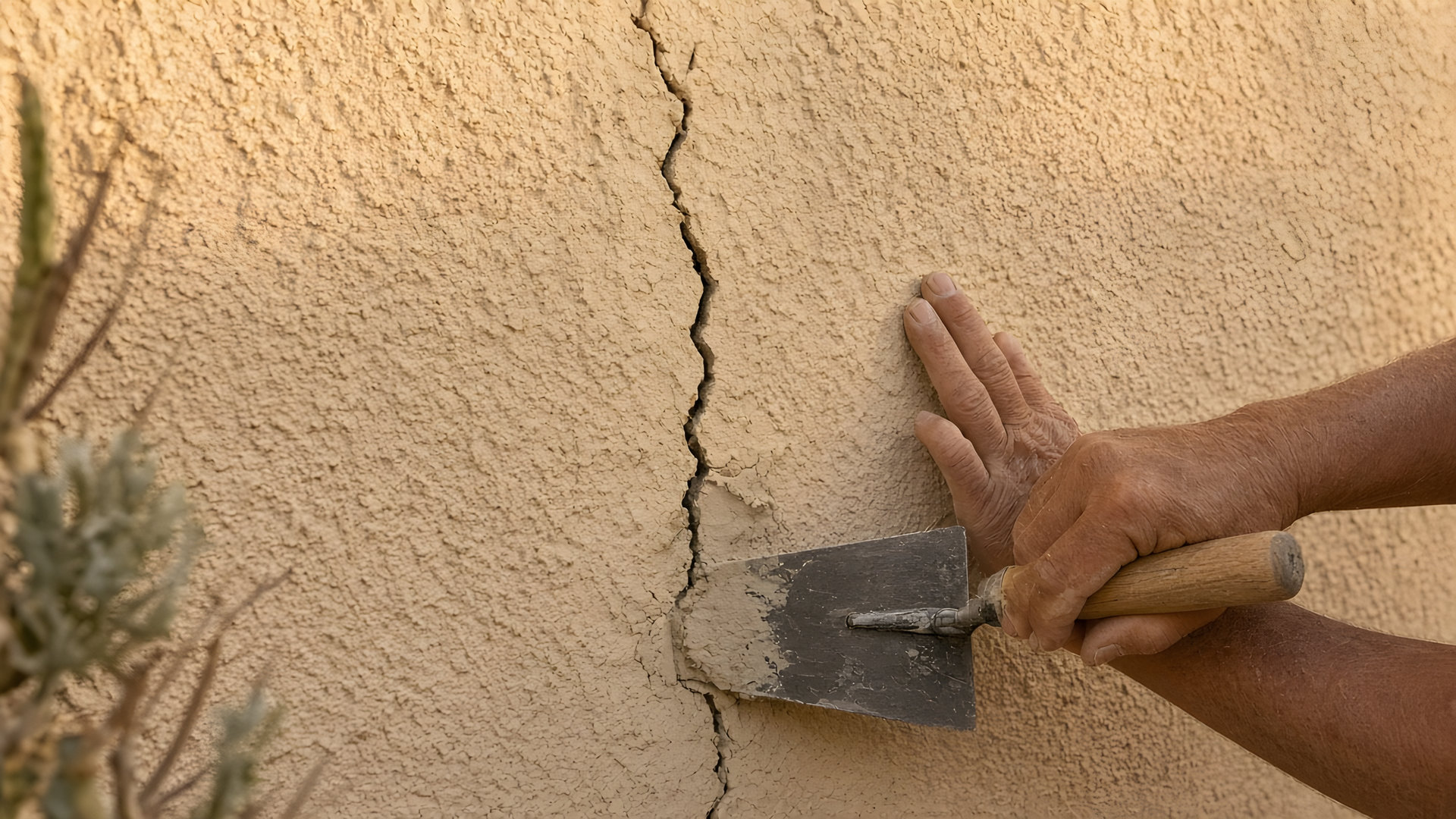
Crack repair
Cracks in long smooth walls and retaining walls repaired so they disappear in low light.
See crack repair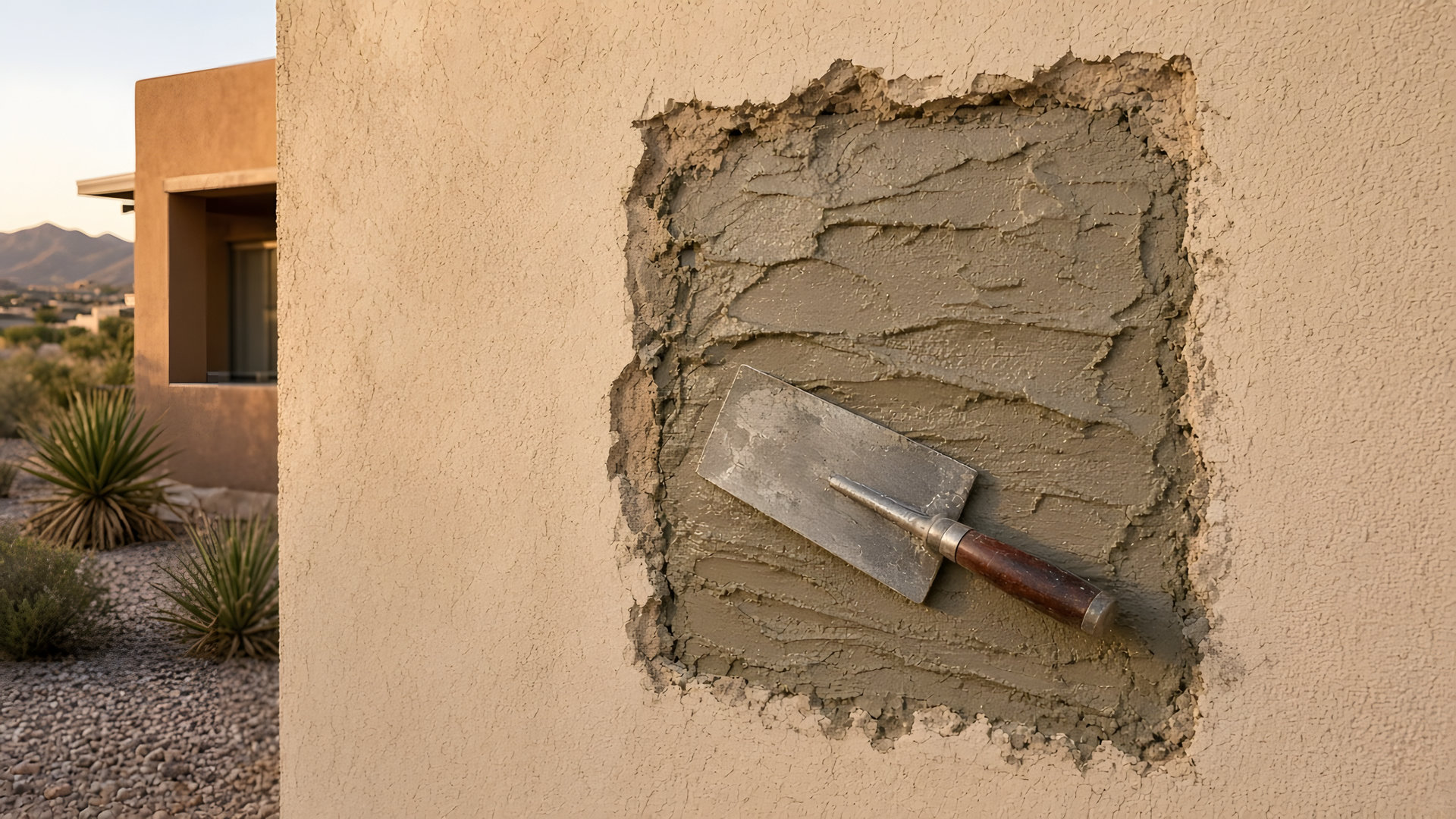
Stucco patching
Patches on custom walls feathered by hand into smooth troweled finishes.
See stucco patching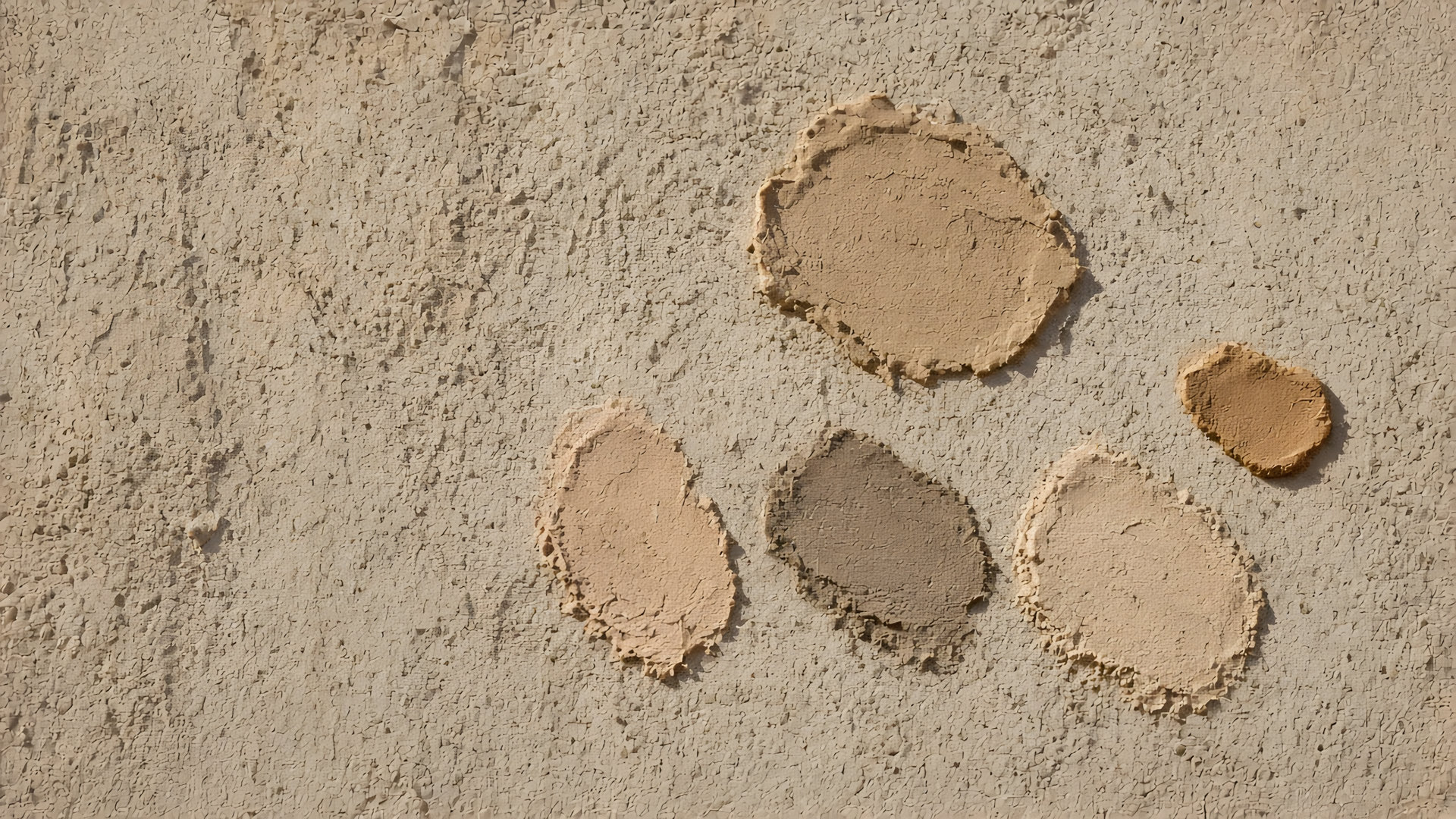
Color and texture match
Integral color and smooth Santa Fe finishes matched with dried sample boards.
See color and texture match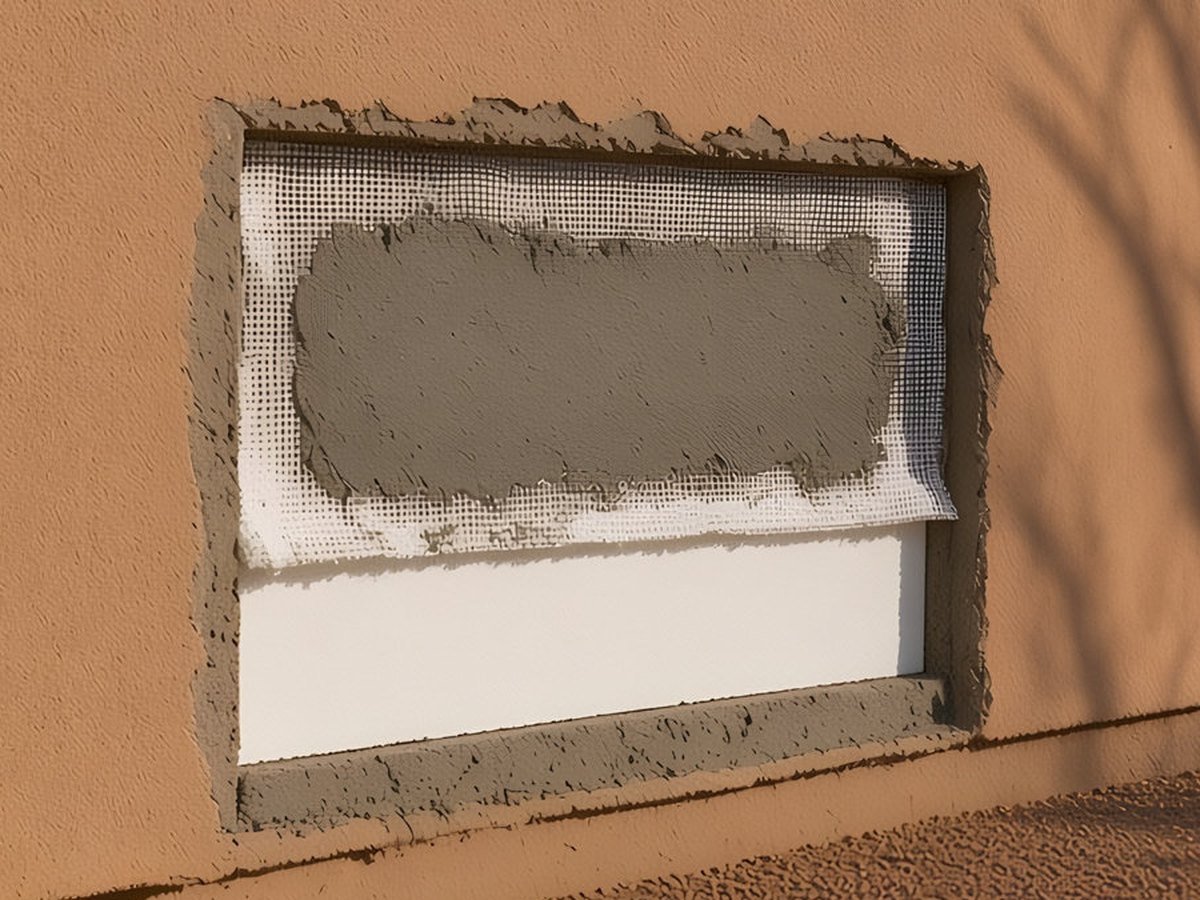
EIFS repair
Foam caps and trim on contemporary homes rebuilt and resealed.
See eifs repair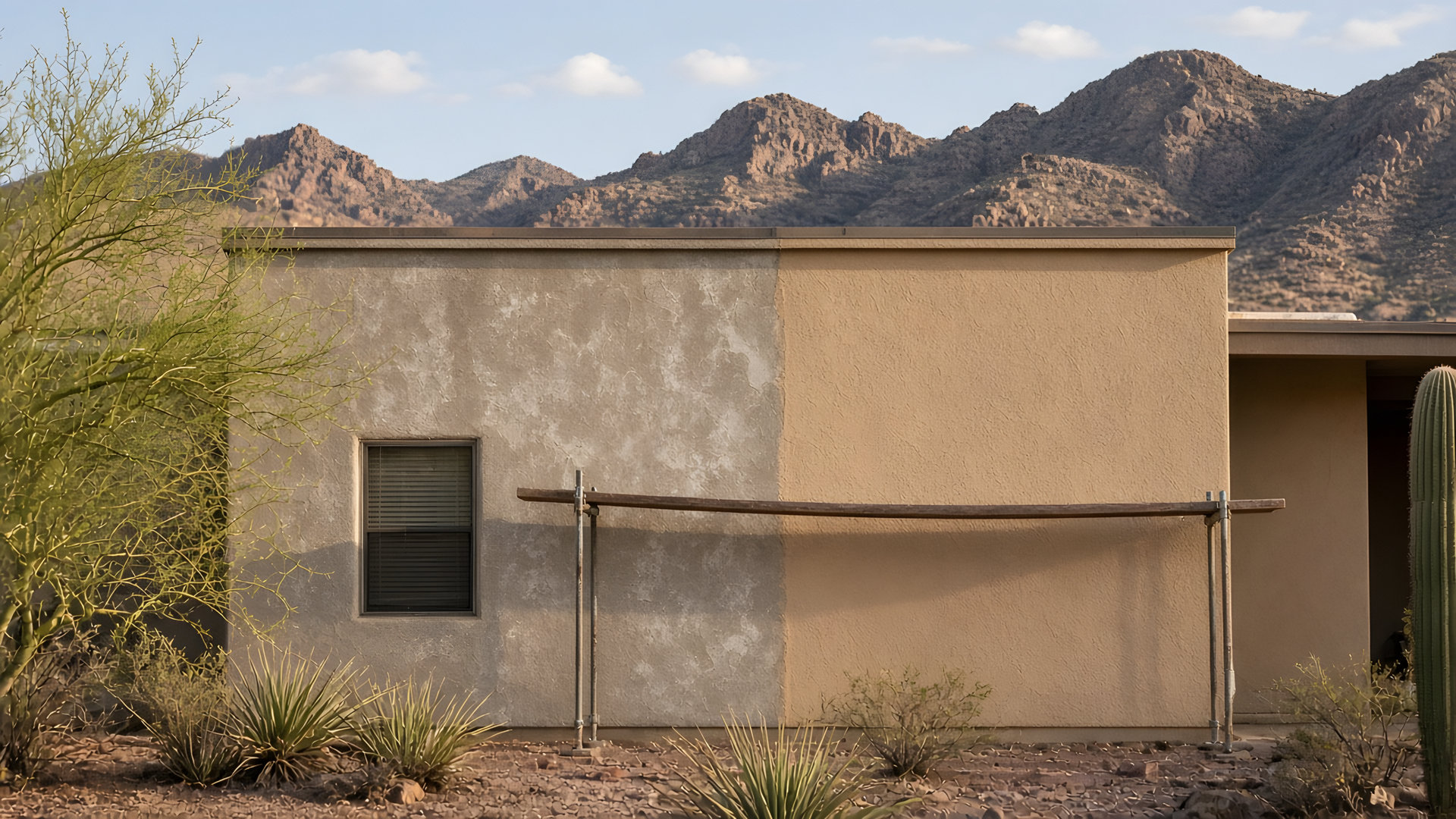
Re-stucco and refinish
Whole-wall refinishing when a smooth face has too many repairs to hide.
See re-stucco and refinish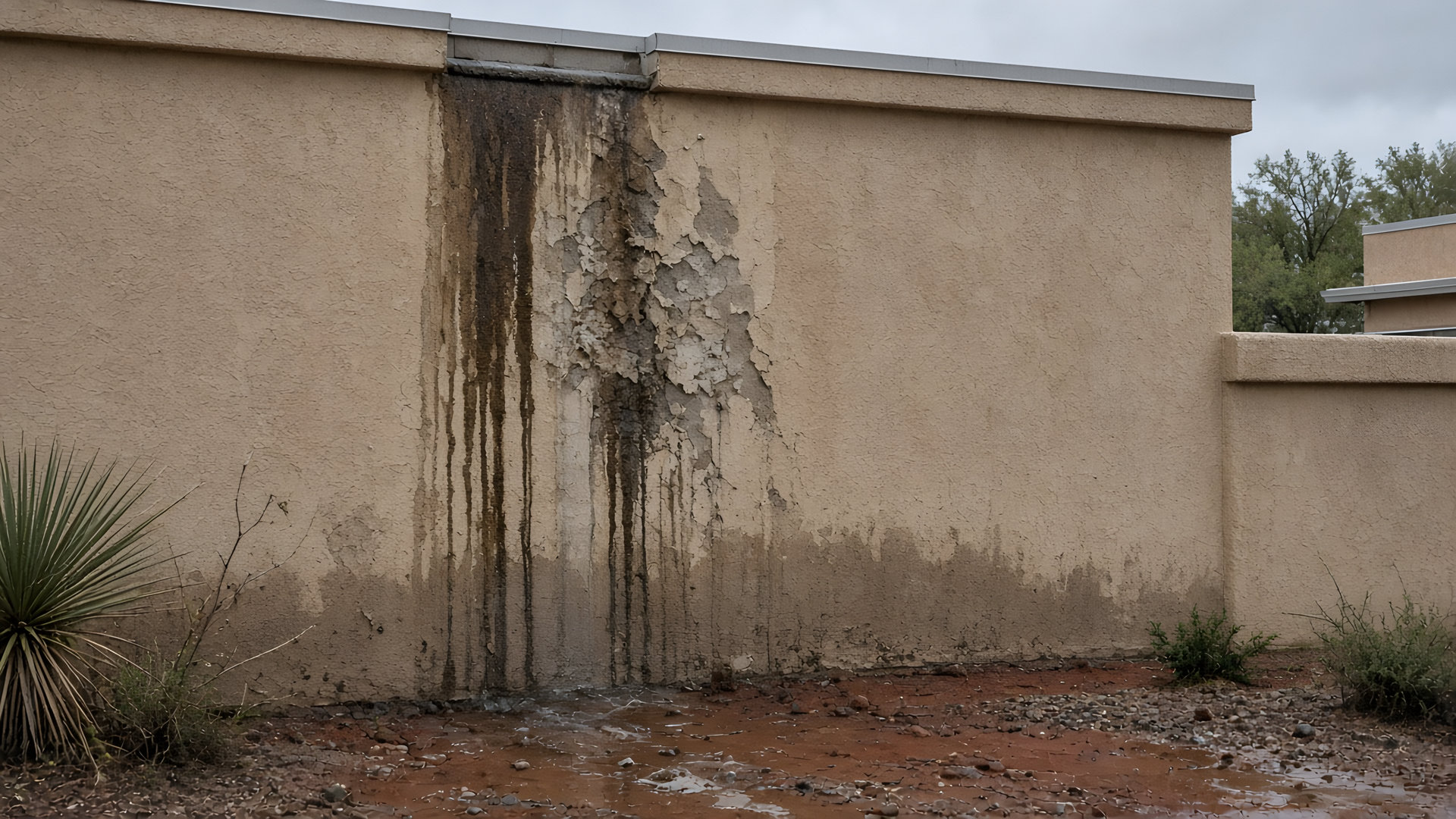
Water and monsoon damage
Hillside runoff, retaining wall staining and parapet leaks traced and fixed.
See water and monsoon damage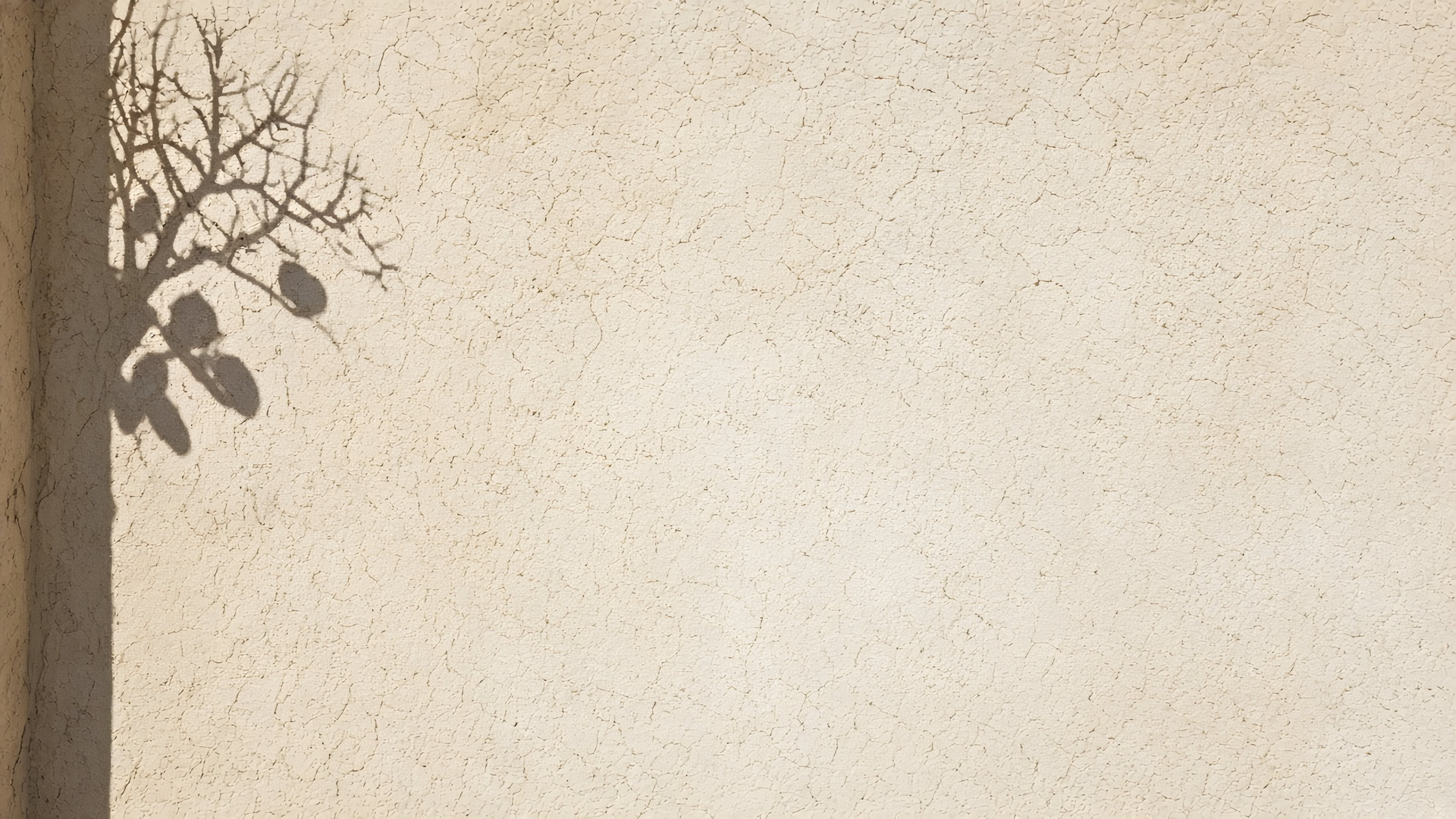
Sun and UV damage
Sun-worn parapets and garden walls restored on exposed hillside lots.
See sun and uv damageCatalina Foothills stucco questions
- Can you match a smooth stucco finish?
- Yes, by hand. Smooth finishes are troweled in several passes, and the repair has to follow the strokes of the wall around it. On a large face, refinishing to a natural break often gives the cleanest result.
- Why is my garden wall cracking more than my house?
- Garden and retaining walls take sun on both faces, have soil pushing on one side and often hold water behind them. They move more than the house and crack sooner. Drainage behind the wall matters as much as the stucco repair.
- Can you work on a steep foothills lot without damaging plants?
- Yes. We plan access before the work starts, protect native plants near the wall and keep ladders and scaffold on paths or pads. Tell us about anything special in the yard during the first visit.
Talk to us about your wall
Call and describe what you have noticed. We will ask a few questions about the house and the problem, then book a time to see it.
If you can, take a wide photo and a close one before we talk. It helps us bring the right materials to the first visit.