Stucco repair in Tucson, Arizona
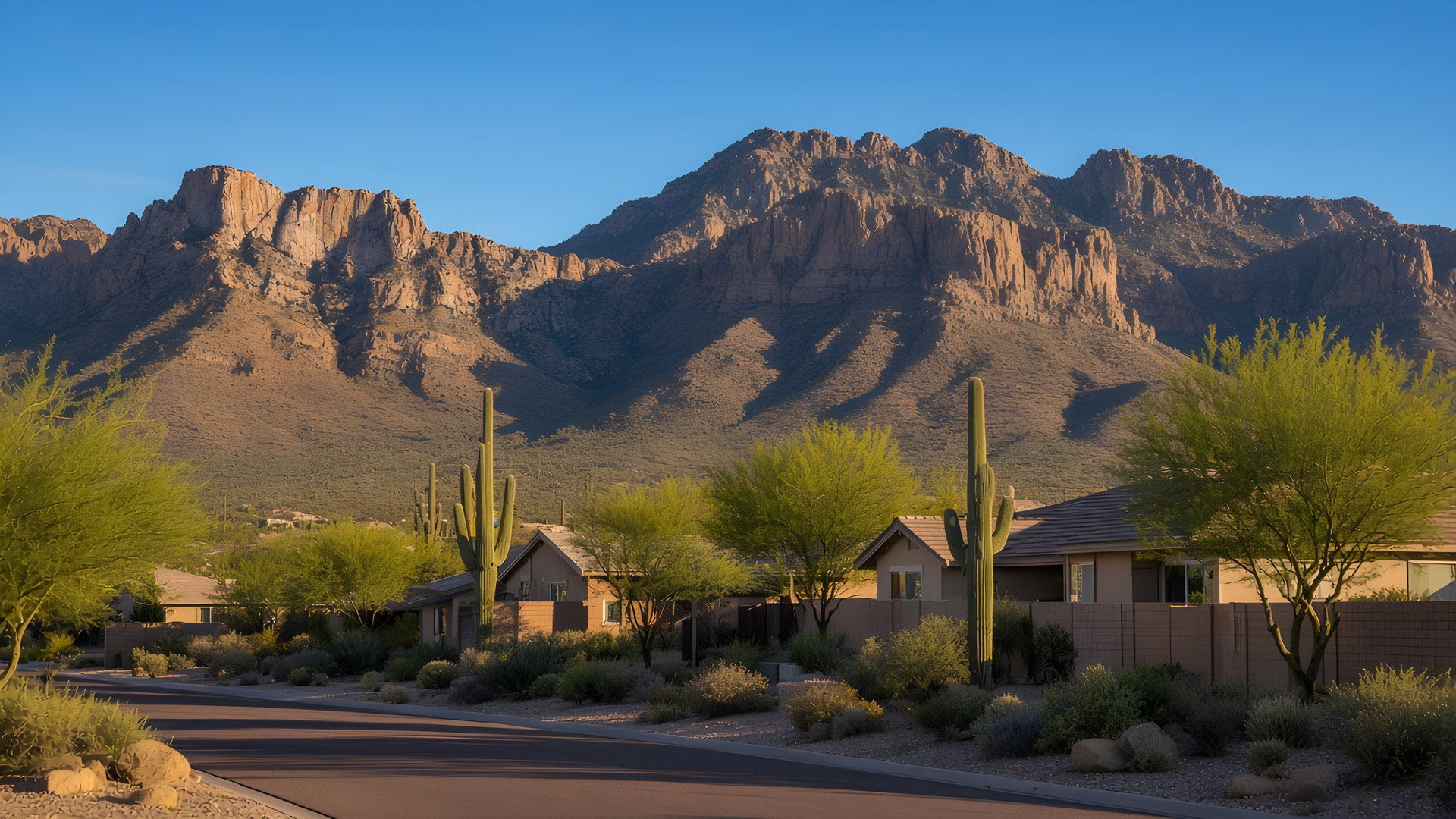
Tucson has more kinds of stucco walls than any town around it. Some houses near downtown are well over a century old, and new houses are still going up on the edges of the city. Each kind of wall needs its own approach.
Houses we work on in Tucson
In Barrio Viejo, Armory Park and El Presidio, many homes are Sonoran row houses or territorial houses with thick adobe walls. Their plaster was traditionally lime or mud, not cement. Those walls need lime-based repairs so moisture can leave the adobe.
Sam Hughes, El Encanto and the neighborhoods near the university have brick and revival-style homes from the 1920s through the 1940s, many with smooth hand-troweled stucco. Matching those finishes takes patient hand work.
Midtown and much of the east side were built out after the war with block houses, often with a thin cement finish straight on the block. Farther out, in places like Rita Ranch and the far east side, frame houses with stucco over lath are the norm.
Common stucco problems in the city
Flat roofs with parapets are everywhere in Tucson, and they are the source of a lot of our work. Cracked parapet caps, short scuppers and failed flashing let monsoon water into the top of the wall. The stain often shows up far below the leak.
Block homes tend to show stair-step and horizontal cracks that follow the block joints. Frame homes show corner cracks at windows and doors. On older houses the main risk is someone having patched adobe with cement, which traps water and causes the plaster to let go in sheets.
Working on older homes
Some central Tucson neighborhoods are historic districts. If your house is in one, exterior changes may need review. Repairs that keep the same look usually do not, but a new color or texture may. Check with the city before planning bigger changes.
On adobe walls we test the existing plaster before patching. Lime and mud plasters are soft and give when scratched. Cement is hard. If cement was used on adobe and the wall is damp behind it, the right repair may be to remove it and replaster with lime.
Before you call about a Tucson house
If you know your house is adobe, or you are not sure, mention it. Signs of adobe are walls more than a foot thick at the windows, a soft plaster that scratches with a key, and crumbling at the base where the plaster has worn away.
If the house has a flat roof, look for where water leaves the roof. Each scupper or canale should throw water well clear of the wall. Staining in a vertical line below one of them is the most common thing we are called about in the older parts of the city.
For block homes, note whether cracks follow a stair-step pattern or run straight across. That tells us whether we are likely looking at joint movement or something lower in the wall.
Weather in the valley
Central Tucson sits around 2,400 feet, low in the valley with mountains on every side. Summer afternoons are hot and the nights cool off quickly once the sun drops behind the Tucson Mountains. Storms build over the Catalinas and the Rincons and roll across the city in the late afternoon during the monsoon.
Stucco repairs in Tucson
Seven kinds of work cover nearly every stucco problem on Tucson area homes. Each card goes to a page with how the repair is done, how long it takes and what affects the cost.
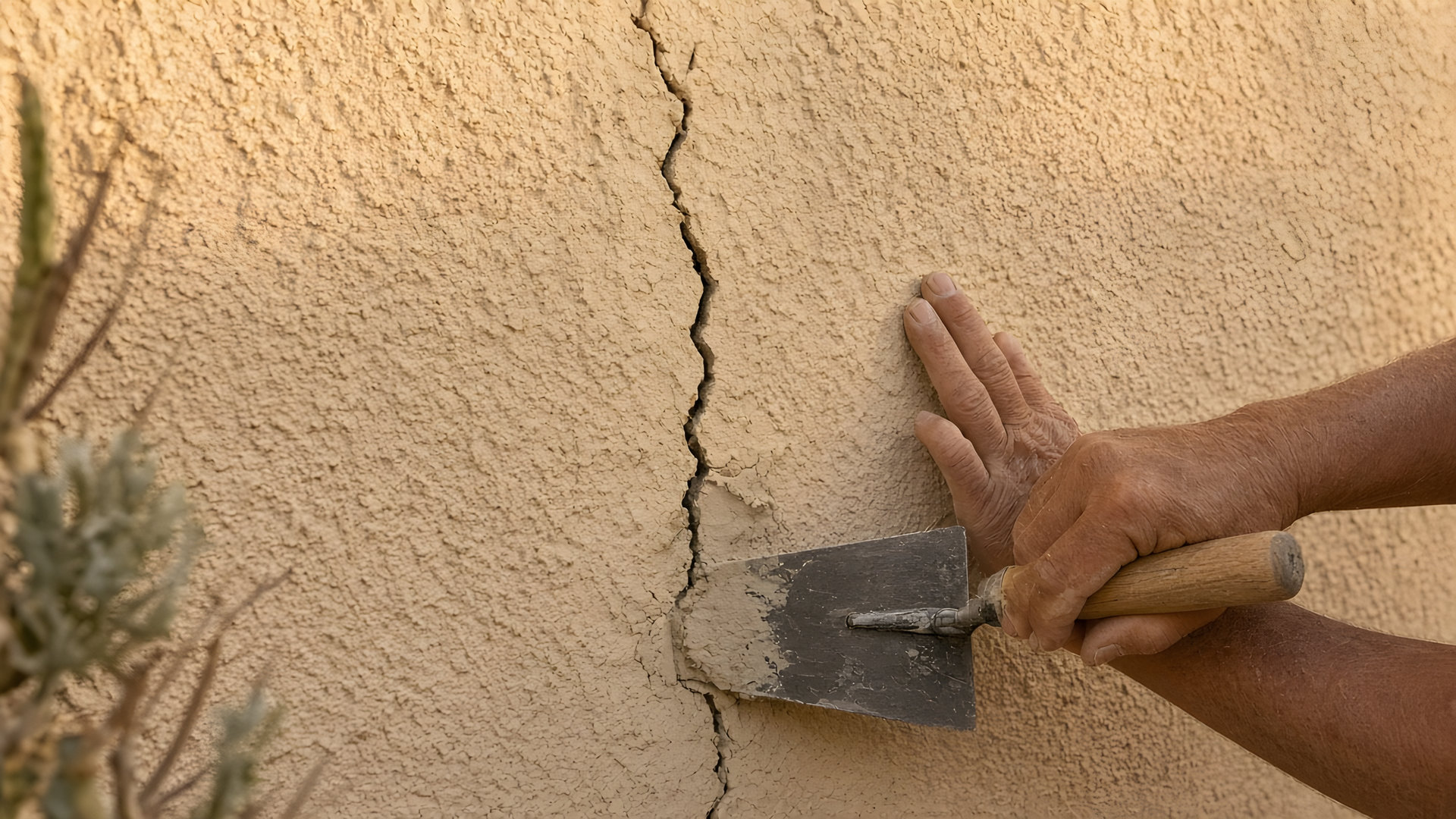
Crack repair
Corner cracks on frame houses and joint cracks on midtown block homes, opened, filled and textured.
See crack repair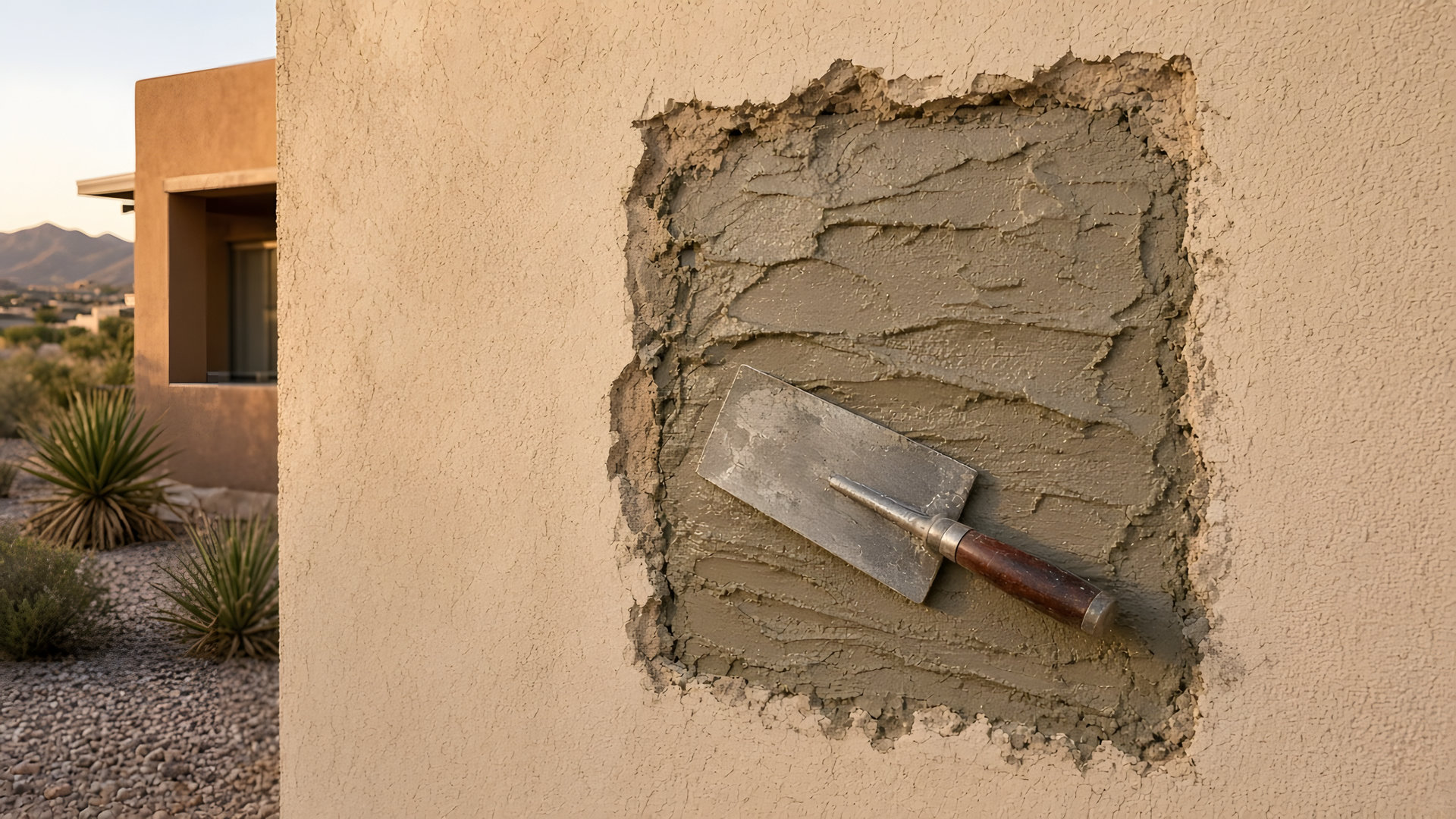
Stucco patching
Old cooler lines and fixture holes patched, with lime patches on adobe walls in the barrios.
See stucco patching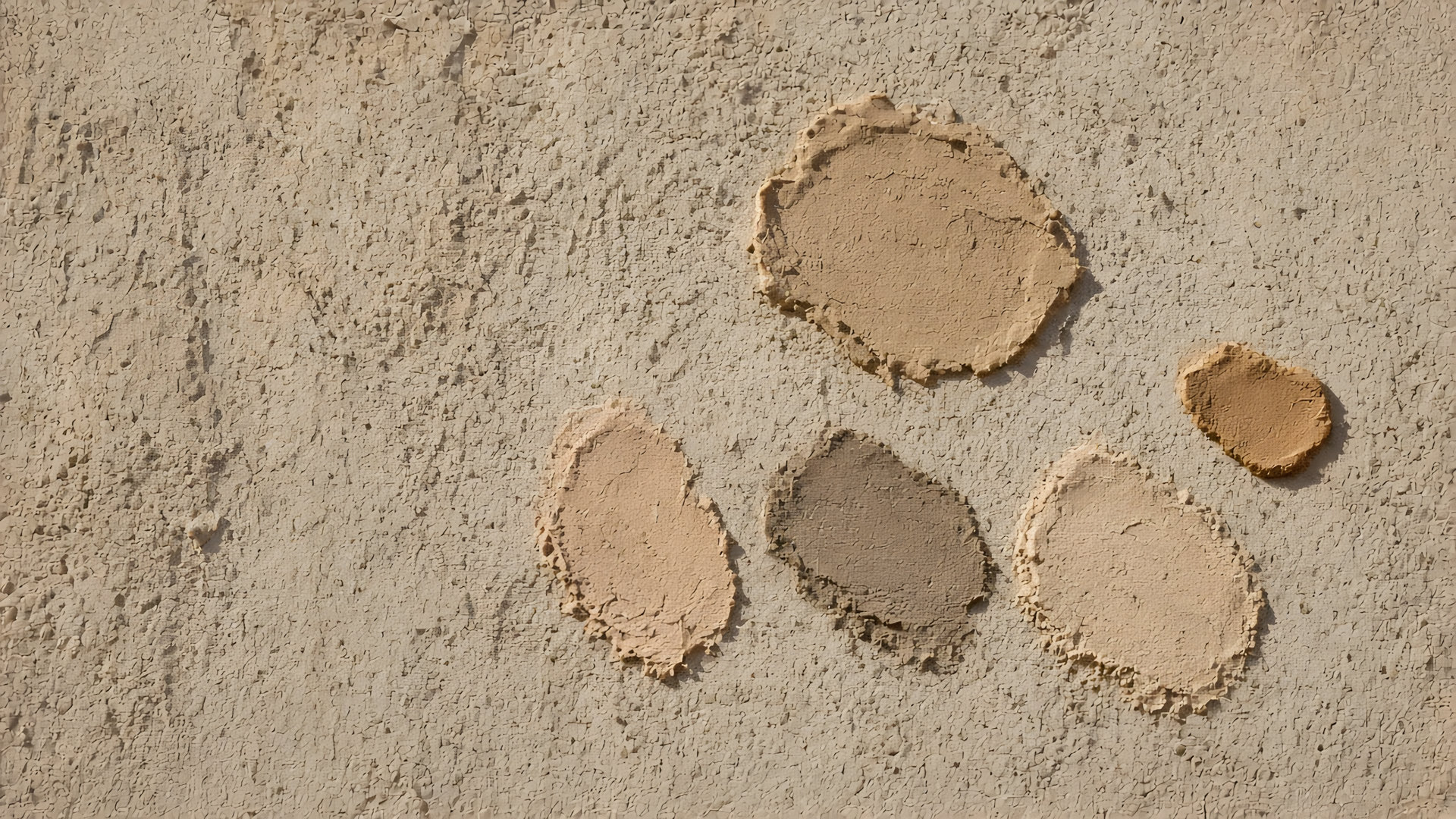
Color and texture match
Hand-troweled finishes near the university and faded integral color matched by eye and sample board.
See color and texture match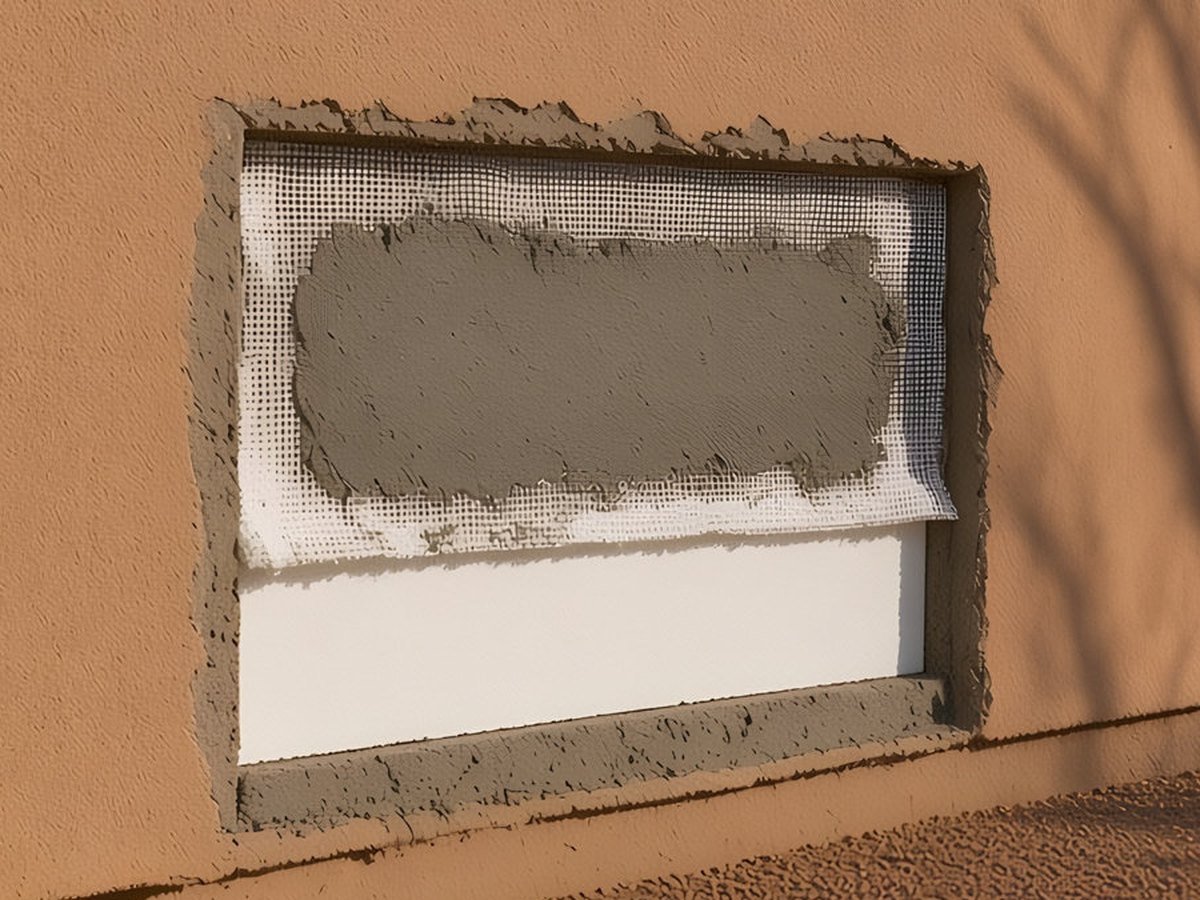
EIFS repair
Foam trim and window surrounds on east side homes and EIFS on small commercial buildings.
See eifs repair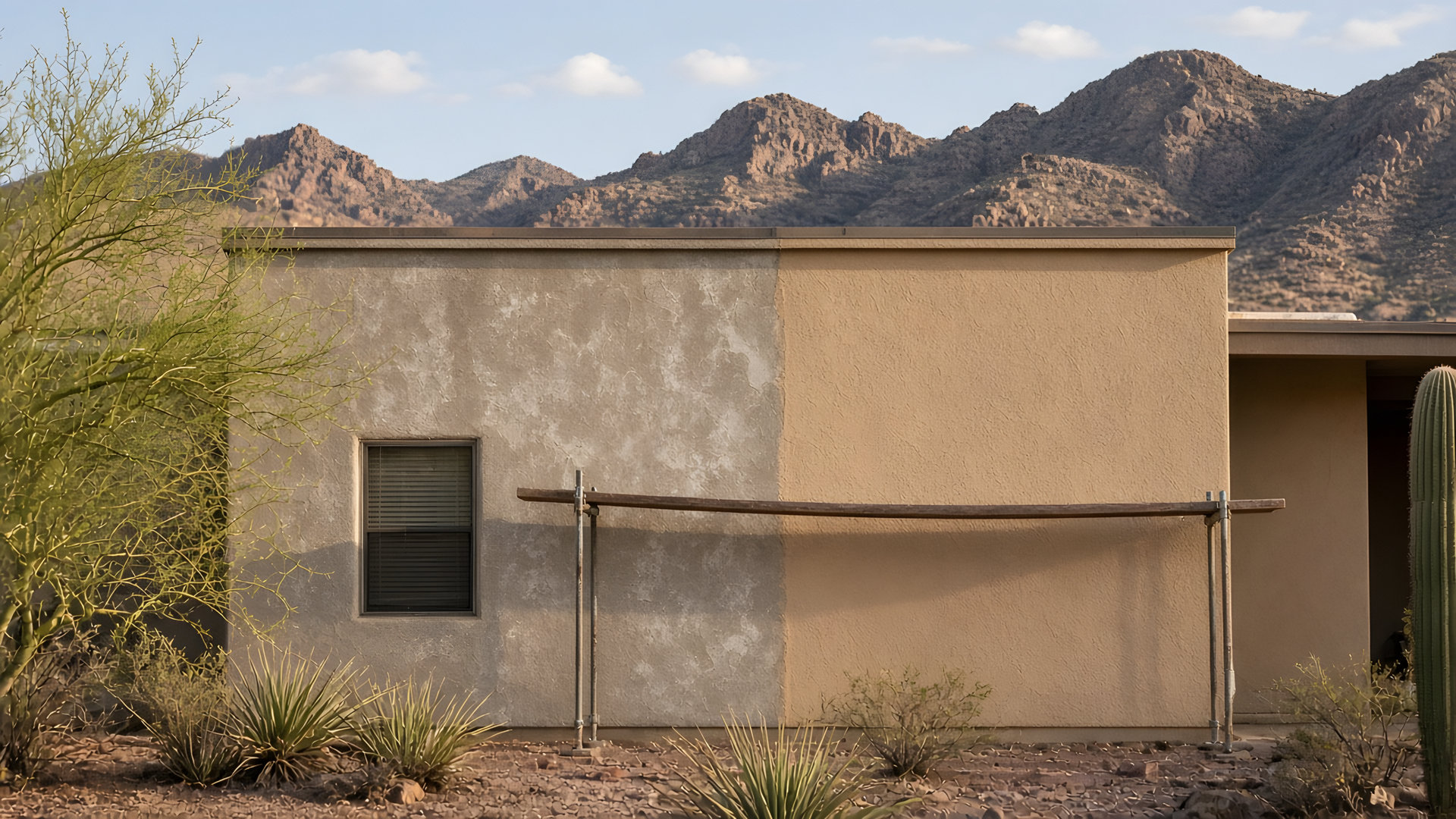
Re-stucco and refinish
New finish coats on worn midtown walls, and lime refinishing on historic adobe.
See re-stucco and refinish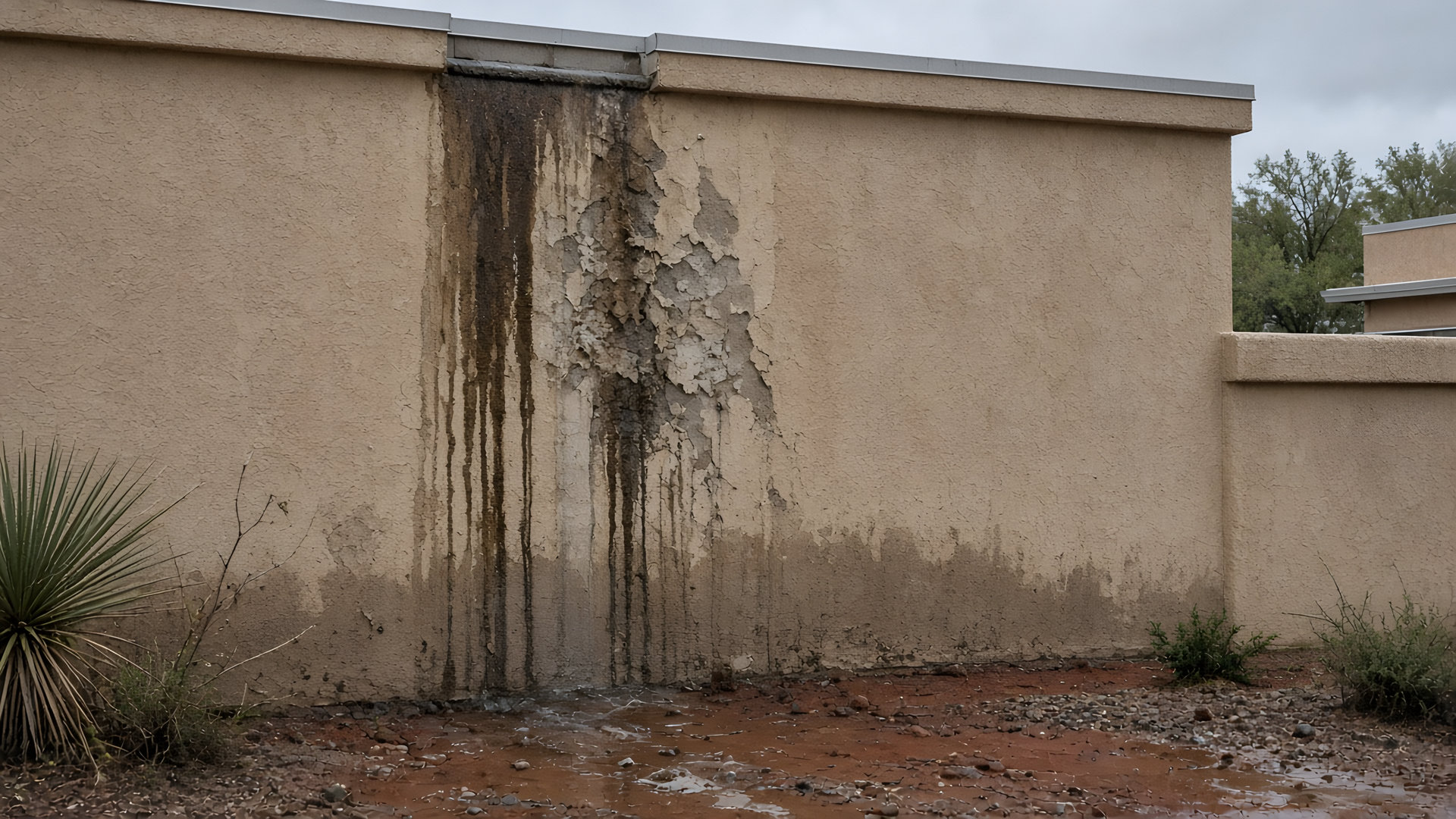
Water and monsoon damage
Parapet caps, scuppers and canales on flat roofs traced and repaired after summer storms.
See water and monsoon damage
Sun and UV damage
Chalky paint and faded west walls recoated with masonry coatings made for strong sun.
See sun and uv damageTucson stucco questions
- Can you repair stucco on an adobe house?
- Yes, with the right materials. Adobe should be patched with lime or a compatible earthen plaster, not hard cement stucco, so the wall can dry. We test what is on the wall before deciding how to repair it.
- Do I need city approval to fix stucco in a historic district?
- Repairs that keep the same look usually do not, but rules vary by district. A change in color, texture or materials may need review. Check with the city historic preservation office before larger changes.
- How do I know if my Tucson house is adobe?
- Adobe walls are usually more than a foot thick, which you can see at window and door openings. The plaster is often softer than cement stucco. Many houses built before the 1940s near downtown are adobe or brick, but a quick test on the wall confirms it.
Talk to us about your wall
Call and describe what you have noticed. We will ask a few questions about the house and the problem, then book a time to see it.
If you can, take a wide photo and a close one before we talk. It helps us bring the right materials to the first visit.