
Re-stucco and stucco refinishing in Tucson, Arizona
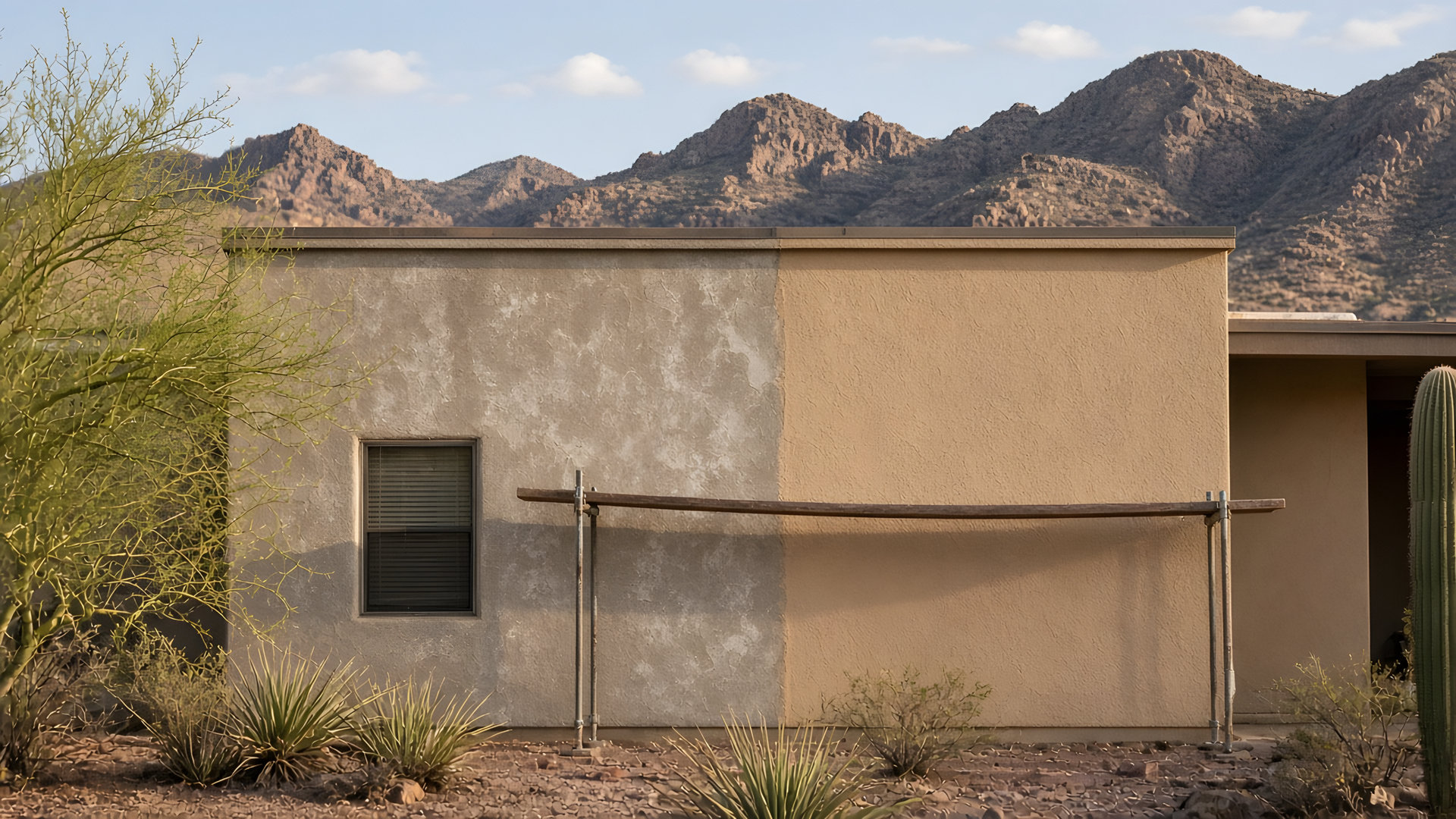
When a wall has more patches than original finish, or the sun has worn it thin, a new finish coat makes more sense than more spot repairs. It is also the way to change texture or color on a stucco house.
Refinish or full re-stucco
Most walls only need a refinish. The base coats underneath are sound and still bonded, and only the top layer is worn, stained or patched. A new finish coat goes over the old one after cleaning and repairs.
A full re-stucco means removing the stucco down to the lath or block and building all the coats new. That is for walls where the stucco has let go of the wall, where the paper and lath behind it have failed, or where water damage is spread across the wall.
We sound the wall by tapping and check the problem areas before suggesting either one. Most houses we look at are refinish jobs with a few repairs first.
How a refinish goes
We protect windows, doors, plants, the walkway and anything else near the wall. The wall is washed to remove dirt and chalky paint. Cracks are filled and damaged areas are patched and allowed to cure.
If the wall is painted, it gets a bonding primer so the new finish grips. Then the finish coat goes on, usually one wall at a time so each face is finished in one pass without lap marks. Edges, corners and trim bands are cut in by hand.
Cement finishes are misted for a few days to cure evenly. Acrylic finishes cure on their own but should not get rain for a day or two, which matters in July and August.
Choosing a new texture
Fine sand finish is the most common on newer tract homes around Tucson. It hides small flaws and is easy to repair later. Light dash or lace finishes add more shadow. Smooth troweled finishes suit Santa Fe and territorial houses but show every crack and patch.
We can make sample boards in a couple of textures so you can see them against the house. Rougher textures hide more and smooth ones show more. That matters on a house where the wall underneath has some waves in it.
Cement or acrylic finish
Cement finish coats are traditional and let the wall dry well. They take integral color and wear slowly, but they can crack with movement. Acrylic finishes are more flexible, hold color longer in the sun and resist small cracks, though they cost more per wall.
On adobe or lime-plastered historic homes, neither is the right answer. Those walls should get a lime finish so moisture can leave the adobe. We will tell you if your house is one of them.
Planning around Tucson weather
Spring and fall are the best seasons for a full refinish. Cement finishes cure slowly and evenly when days are mild, and acrylic finishes are easier to work. In summer we start at first light and move around the house to stay out of direct sun.
During the monsoon we watch the forecast closely. A finish coat that takes a hard rain in its first hours can wash or spot. Winter work is fine on most days, but we avoid finishing when nights are near freezing.
What changes the cost of refinishing
Wall area is the starting point. Height and access come next, since second stories, parapets and slopes need scaffold. The number of repairs before the finish goes on is the other big factor.
Texture and material add to it. A smooth hand-troweled finish takes far more labor than a sand finish. Acrylic material costs more than cement. We price each option so you can compare them side by side.
Re-stucco and refinish around Pima County
Re-stucco and refinish questions
- Can you refinish over painted stucco?
- Yes, with preparation. The paint must be sound, the wall washed and a bonding primer applied. Peeling or chalky paint has to come off first, or the new finish will come off with it.
- How long does a full house refinish take?
- It depends on size, repairs and weather. A typical single-story house takes days, not weeks, once repairs are done. Wind and summer storms can add days, because finish coats should not go on in heavy wind or right before rain.
- Will a new finish cover cracks for good?
- It covers cracks that have been repaired. A crack that is still moving will come back through any finish. That is why the cracks are repaired, and moving ones given a control joint, before the finish coat goes on.
Talk to us about your wall
Call and describe what you have noticed. We will ask a few questions about the house and the problem, then book a time to see it.
If you can, take a wide photo and a close one before we talk. It helps us bring the right materials to the first visit.