
Stucco color and texture matching in Tucson, Arizona
Most people can live with a crack. What bothers them is a patch they can see from the driveway. Matching the texture and color is what makes a repair look like it was never there.
Why matched repairs are hard
Stucco texture comes from the tool and the hand that applied it. Two plasterers working the same mix will leave slightly different walls. The texture on your house may also have been changed over the years by paint, sun and earlier repairs.
Color has its own problems. Integral color stucco has pigment mixed into the finish coat, and it fades as it ages. A fresh batch of the original color will look too dark next to a wall that has had twenty summers of Tucson sun.
Reading the texture first
We start by looking closely at the finish. Sand finish is fine and even. Light dash is thrown on and left to dry with small peaks. Skip trowel has flat smooth patches between areas of texture. Smooth or Santa Fe finishes are hand troweled and show soft waves in raking light.
We look at the wall in morning and late afternoon light if we can, because low sun shows texture that midday light hides. On a large job we make a small test area somewhere out of the way and let you see it before we go further.
Matching the color
On a painted wall the color match is a paint match. We take a chip from a sound area and have it read, or match it by eye with samples on the wall. The patch is primed and the wall is painted to the nearest corner, control joint or other break.
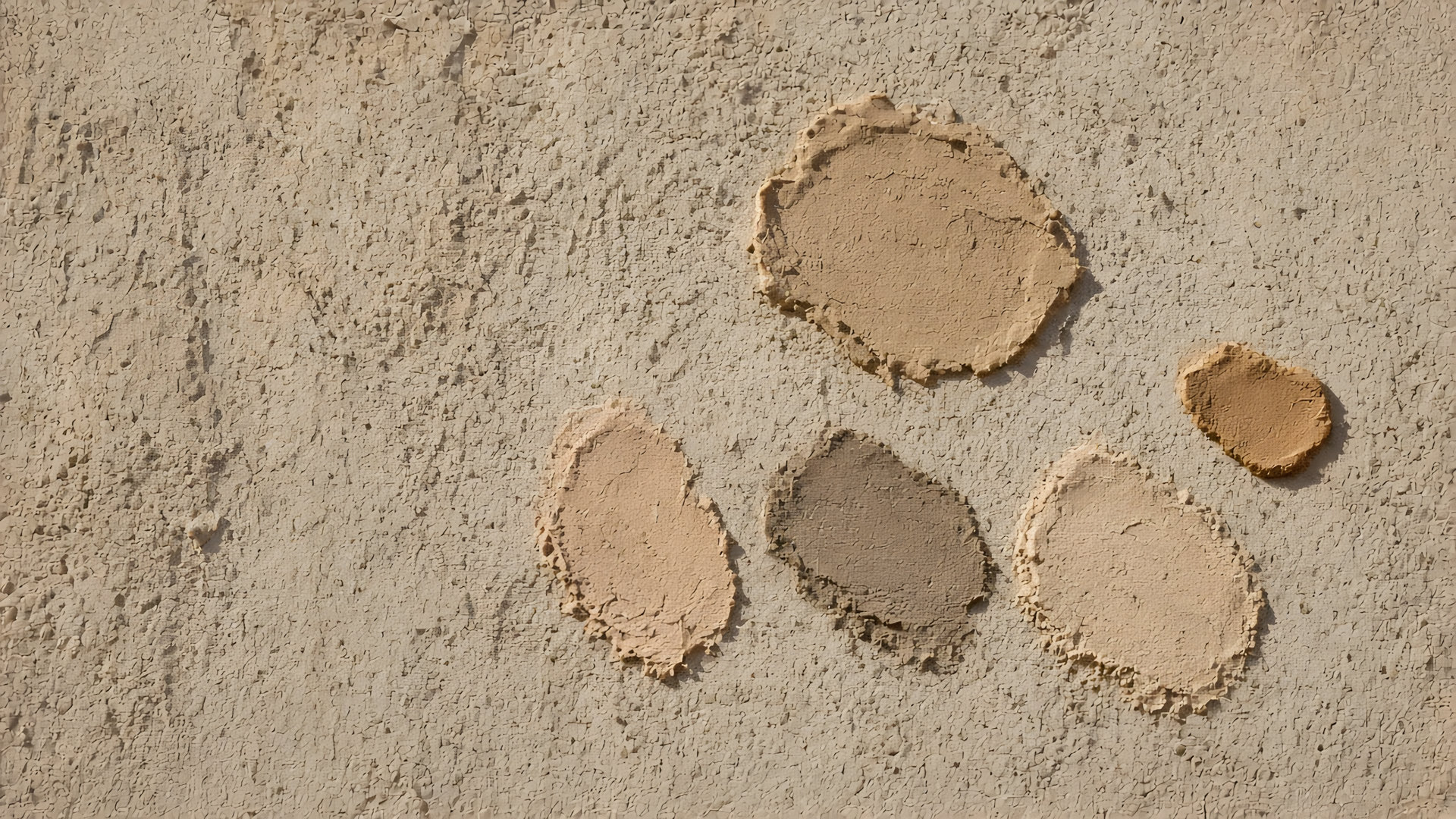
On integral color stucco we mix sample boards in a few shades close to the faded wall, let them dry fully and compare them in daylight. Wet stucco looks much darker than dry, so we never judge a color while it is wet. A fog coat, a thin color wash made for stucco, can even out a patch with the wall around it.
HOA colors and approved palettes
Many neighborhoods in Oro Valley, Marana, Vail and Sahuarita have an HOA with approved exterior colors. If your house is still on its original approved color, matching is usually straightforward. If it was repainted, we match what is on the wall now.
If you are changing colors as part of the repair, check with the HOA first. We can give you the product and color name to submit, and we will wait for the approval before putting color on the wall.
Matching on older and custom homes
Custom homes in the Catalina Foothills and older houses near the university often have hand-troweled finishes that no machine can copy. On those walls the plasterer has to study the strokes and repeat them by hand, a few feet at a time, feathering into the old finish.
Older walls may also have been painted several times. Each coat softens the texture a little, so a fresh finish can look sharper than the wall beside it. We knock down the new texture slightly so it sits right next to the old one.
When it is better to refinish the whole wall
Sometimes a match will never be quite right. The wall has several old patches, the color has faded unevenly, or the original texture has worn away on the sunny side. In those cases a new finish coat on the whole wall gives a cleaner result than another careful patch.
We will show you the options and what each one looks like when done. A new finish coat on one elevation costs more than a patch but often less than people expect, because the base coats underneath stay in place.
Color and texture match around Pima County
Color and texture match questions
- Can you match stucco that has faded in the sun?
- Usually, yes. We match the faded color on the wall, not the original color from the bag. On the south and west sides the fade can be uneven, and a fog coat or refinish of the whole face may give a better result than a spot match.
- Why does a new patch look darker at first?
- Wet stucco is darker than dry stucco, and fresh cement takes several days to lighten as it cures. We judge the match once the patch is fully dry, and we ask you to do the same.
- Do I need HOA approval to repair stucco?
- Repairs in the existing color usually do not need approval, but rules differ by neighborhood. A color change almost always does. Check your HOA guidelines or ask the management company before we start.
Talk to us about your wall
Call and describe what you have noticed. We will ask a few questions about the house and the problem, then book a time to see it.
If you can, take a wide photo and a close one before we talk. It helps us bring the right materials to the first visit.